
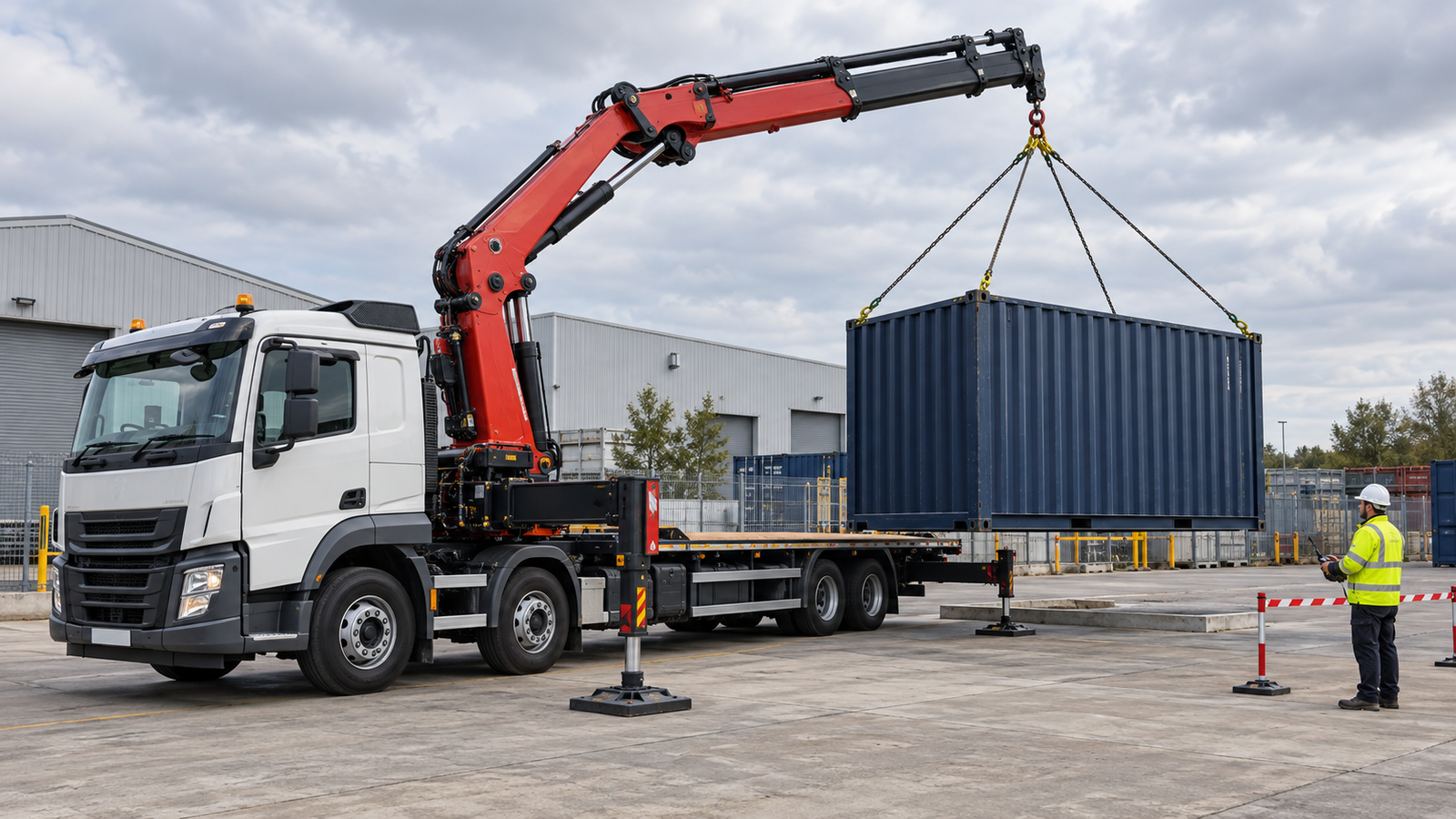
A storage container or site cabin can provide useful space, but arranging its delivery requires more than choosing where it should stand. The unit has to be identified accurately, released for collection and accepted at a location that has been assessed for the proposed vehicle and lifting operation.
If you are considering HIAB hire near Heathrow for a container move, start with the unit’s details and the conditions at both addresses. A suitable arrangement depends on the actual load, its condition and the access available.
This guide explains how to prepare a container transport enquiry, coordinate the people involved and avoid common misunderstandings when moving a unit around Heathrow, West London or the wider Greater London area.
Identify the Unit You Want to Move
“Container” can refer to several different items. A shipping container, converted office, storage unit and welfare cabin may look similar in a brief photograph while having different handling requirements.
Give the supplier an accurate description, overall dimensions and reliable weight information. State whether the unit has been converted, fitted out or modified since manufacture. Internal partitions, equipment and other additions should be disclosed.
Where possible, provide identification details and the manufacturer’s relevant handling documentation. Photographs should show the whole unit as well as important features. If buying from a seller with several units on site, identify the exact one being collected so the enquiry and collection instructions refer to the same item.
Confirm Whether the Unit Is Empty
A unit described as empty may still contain shelving, fixtures or loose equipment. Tell the supplier what remains inside and whether those items are included in the move.
If you intend to transport contents with the unit, describe them and ask whether that proposal can be assessed. Do not assume that a container can carry everything currently stored inside simply because its doors will close.
Arrange for the owner to verify the condition and contents before the final booking details are agreed. If the unit is being cleared by another company, obtain confirmation that the work is complete. This helps prevent a collection team arriving to find a different load from the one described.
Explain Its Condition Honestly
Older containers and cabins may have damage, corrosion or previous repairs. Provide clear photographs and tell the supplier about known problems, especially where they relate to the unit’s structure or handling features.
A sale listing rarely contains all the information needed for transport assessment. Ask the seller for current images rather than relying exclusively on photographs taken when the unit first went into service.
If its condition is uncertain, explain that uncertainty. The supplier can then advise what further information or specialist assessment is required. It is better to establish suitability before agreeing a firm collection than to discover that assumptions about the unit cannot be supported.
Check Collection Access With the Owner
The unit’s present location matters. A container that was easy to deliver several years ago may now sit behind fencing, parked vehicles or later additions to a yard.
Ask the owner to describe the current approach and provide recent photographs. Confirm whether other units stand close to it and whether the working area is used by neighbouring businesses.
Give the transport supplier details of the exact location within the premises. If access requires keys, an appointment or permission from an estate manager, identify who will arrange it. A seller agreeing to release the unit is useful, but the visiting vehicle also needs a practical route to the agreed collection position.
Choose the Destination Before Booking
Discuss the final position with the person responsible for the receiving land. A container placed in an inconvenient location can create problems long after the delivery is complete.
Consider how the unit will be used, where doors will open and how people will reach it. Think about future access as well as the delivery day. For a cabin, the receiving business may also need separate arrangements for steps, services or occupation.
These decisions should feed into the transport discussion. Show the preferred position on a site plan or marked photograph, then ask the supplier to assess whether the proposed unloading arrangement is suitable. Avoid presenting an unverified position as a confirmed delivery instruction.
Arrange Suitable Ground and Site Preparation
Ask the appropriate site professional what preparation the unit’s intended use and location require. Delivery availability should not be used as a substitute for checking the receiving area.
Tell the transport supplier about the surface, recent groundworks and any information the site holds about buried features or limitations. Ask what details are needed to assess the vehicle’s proposed working position.
Keep site preparation distinct from transport. If a contractor is preparing the receiving area, agree when it will be complete and who will confirm readiness. The booking should proceed on the basis of a checked destination rather than an assumption that the site will somehow be finished before arrival.
Clarify Lifting and Road Transport Arrangements
The lifting proposal and the journey both need attention. Ask the supplier what information is required to assess the particular unit and which responsibilities form part of the quotation.
The DVSA’s guidance for work cabins and containers includes specific advice on securing these loads during road transport. The arrangement must suit the unit and carrying vehicle; its external appearance alone does not establish the appropriate method.
Explain any requested orientation at delivery, including which way the doors should face. That information helps the supplier understand the intended outcome before planning the work. If the position changes later, ask for the proposal to be reviewed.
Investigate Permissions for the Receiving Site
There can be separate questions about permission to use land, the unit’s intended use and arrangements for delivery. Ask the landowner and relevant local authority what applies to your proposal.
For transport activity affecting a road managed by TfL, its highway licensing information is a useful starting point. Other roads may fall under the borough council or another highway authority.
Keep any required delivery permissions separate from decisions about placing or using the container. Approval for one aspect should not be assumed to settle another. Record who is checking each issue and allow the booking programme to reflect any outstanding decisions.
Coordinate Sellers, Buyers and Site Managers
A container purchase often involves a buyer arranging transport from a seller’s premises to land controlled by someone else. Give each party the information relevant to its role.
The seller should know the collection reference, planned appointment and release arrangements. The receiving team needs the unit description, proposed position and contact details for the booking coordinator.
Before dispatch, confirm that both locations are ready. If the seller changes the unit, the buyer changes the destination or the site manager changes the available space, notify the supplier. Maintaining one agreed brief helps prevent a chain of individually reasonable changes from producing a job that no longer matches the original quotation.
Discuss the Move With a HIAB Supplier
You can enquire about MC Recovery’s HIAB hire in Heathrow and provide the details needed to assess your container or cabin requirement. Nearby enquiries can also be discussed through the Uxbridge HIAB hire page.
For further operator-led hire information, visit MC HIAB Hire. Ask about suitability before purchasing a unit on the assumption that a particular vehicle will be able to collect and deliver it.
Check Purchase Terms Before Arranging Collection
When buying a second-hand unit, establish exactly what the seller is providing. Does the sale price include any preparation, or is the buyer expected to arrange everything needed for release and transport? Ask when payment must clear and who can authorise collection.
For example, a business purchasing a storage container near Heathrow may arrange delivery to premises elsewhere in Greater London. The transport booking can be ready while the seller is still waiting for an internal release instruction. That administrative gap can prevent collection just as effectively as a locked gate.
Obtain the collection reference and seller’s clear written release confirmation before dispatch is agreed. Give the transport supplier the name of the person authorised to release the unit, together with any appointment requirements.
Keep purchase documents separate from the transport scope while checking that the two arrangements work together. If the seller changes the collection date or substitutes a different unit, review the booking before proceeding. A clear release process protects the programme and reduces uncertainty for everyone involved. It also helps the buyer know which questions need resolving with the seller directly.
Questions About Container Deliveries
Can a HIAB move any shipping container?
Suitability must be assessed for the specific unit, weight, condition, access and proposed lifting arrangement. Do not assume that a standard container size guarantees acceptance. Provide the details and ask the supplier what can be accommodated.
Can a container be delivered over a fence?
Describe the fence, surrounding area and requested position, then ask for an assessment. A visible gap or apparently short distance does not establish that the proposed lift is achievable. The supplier needs to consider the actual conditions.
Who prepares the container for collection?
Agree this with the owner, seller and transport supplier. Confirm who clears contents, disconnects any services and provides access. These tasks should have named owners and completion dates rather than being left for the collection team to resolve.
Prepare Your Container Transport Enquiry
Gather current photographs, verified unit information and full details for both addresses. Explain the intended position, preferred timing and any preparation or permissions still outstanding. Contact MC Recovery to discuss your proposed move near Heathrow or across Greater London and establish the next steps.